Choosing an HTML5 banner tool means choosing how you’ll handle the whole campaign: approved artwork, animation, sizes, client revisions, and final delivery. This guide compares 11 tools by those jobs, including their pricing and limitations.
Disclosure and method: I build Foldwrap. This shortlist uses vendor documentation and public pricing checked on 8 October 2026. Recommendations are my assessment of workflow fit.
Which tools should you shortlist?
Start with the work already on your desk. Pick two candidates, then try the same campaign in both.
| Your next job | Start by evaluating | What should decide it |
|---|---|---|
| Revise an existing FLA campaign | Adobe Animate | Whether your existing source, scripts and templates already solve the job |
| Animate approved Figma designs | Bannerify, Foldwrap | Editing inside Figma versus importing into a dedicated editor; fidelity after export |
| Build responsive or interactive HTML5 with code access | Google Web Designer; Hype on Mac | Layout rules, interaction requirements and delivery setup |
| Let marketers create ads from templates | The Brief | Template fit, brand controls and revision effort |
| Generate variants from spreadsheets or an API | Abyssale; Bannerify for Figma-based batches | Data mapping, output volume and animation control |
| Produce size sets with shared previews | Viewst, Foldwrap, The Brief | Revision effort and the collaboration features your team needs |
| Coordinate production and distribution across markets | Bannerflow, Celtra, Bannerwise | Required channels, integrations, permissions and contract scope |
For a concrete example, our Animate vs Google Web Designer vs Foldwrap comparison includes three live versions of the same campaign, downloadable HTML5 ZIPs and measured package sizes. They use different export settings and artwork encoding, so those measurements are examples to inspect, not a universal speed or file-size ranking.
HTML5 export pricing at a glance
These prices identify an HTML5-capable plan, rather than a cheaper plan that only exports images or video. Annual subscriptions show the monthly equivalent and annual total; they are not month-to-month offers. Prices are in USD. Taxes, regional offers and contract terms can change the checkout total.
| Tool | Working environment | HTML5-capable price | Restriction to check |
|---|---|---|---|
| Adobe Animate | Desktop timeline | Adobe subscription; regional plan pricing | Existing Creative Cloud entitlement and commitment term |
| Google Web Designer | Desktop editor + code | Free | Export environment and platform requirements |
| Tumult Hype | macOS timeline | Standard: $49.99; Pro: $99.99 one-time | Export scripts and responsive breakpoints require Pro |
| Bannerify | Figma plugin | Pro: $49/user/month or $499/user/year | Limited free workflow; paid licence per Figma user |
| Foldwrap | Figma import → browser editor | Pro: $49/month | Free exports have a watermark; individual account ownership |
| The Brief | Browser design platform | Pro: $29/month billed annually ($348/year), single seat | Team collaboration and ad serving need higher plans |
| Abyssale | Browser templates + data/API | Suite: $75/seat/month or $60/seat/month billed annually ($720/year) | HTML5 requires Suite; generation credits apply |
| Viewst | Browser ad-production platform | Standard: $110/user/month billed annually ($1,320/year) | Real-time collaboration starts on Plus |
| Bannerwise | Browser creative-management platform | Confirm current quote; published plan guide dates to 2023 | Annual contract and add-ons; don't budget from an old price |
| Bannerflow | Creative automation platform | Request quote | Confirm production, distribution and service scope |
| Celtra | Enterprise creative platform | Request quote | Confirm product, activation and support scope |
Compare the cost for your actual users and output volume. A per-account subscription, a per-seat licence and a credit-based generation plan do not buy the same capacity. Follow the linked pricing sources before purchasing.
Desktop authoring tools
Adobe Animate
Best fit: maintaining FLA libraries, reusable symbols and custom timeline work. Edit existing source and publish HTML5 Canvas output; established templates and scripts may save a rebuild.
Main limitation: carrying a revision across a campaign depends on your source structure and automation. Inspect the Canvas/CreateJS output and dependencies for your target platform. Adobe's publishing documentation.
Animate remains available to new and existing users, with security and bug fixes but no planned new features. Adobe says there is no discontinuation deadline. Maintenance mode alone is not a reason to abandon a working setup. Adobe maintenance FAQ.
Price: an Adobe subscription; check your existing entitlement before buying or switching.
Google Web Designer
Best fit: visual HTML5 authoring with direct code access, responsive layouts and Google's dynamic-ad workflows. Build with its timeline and components, then publish for the required environment. Google's feature overview.
Main limitation: translating approved artwork into responsive rules is still production work. GWD supports fluid layouts and media-rule overrides for positioning, content and animation; you do not necessarily need a separate document for every size. Test each required output after a revision. Responsive layout documentation.
Price: free. Compare the full build-and-revision effort with paid tools, especially if you already have working GWD templates.
Tumult Hype
Best fit: Mac designers building custom interactive HTML5 with keyframes, motion paths and a visual timeline. Hype overview.
Main limitation: macOS authoring; responsive breakpoints and export scripts require Pro. Standard exports HTML5 to a folder, but an ad still needs the correct click handling and package structure for its destination. Check the available platform scripts against your brief.
Price: Standard is $49.99 one-time; Pro is $99.99, or a $49.99 upgrade from Standard. Consult the feature comparison and export scripts for your requirements.
Figma plugins
Bannerify
Best fit: designers who want artwork, animation and export inside Figma. Animate frames, preview the result and export HTML5 with platform presets. CSV/XLSX data can drive content variants, and preview pages support stakeholder review. Bannerify workflow and features.
Main limitation: the production source and workflow remain tied to Figma. Try a late copy change across your frames, then check wrapping, timing and exported assets. Decide whether that suits your handoff better than a separate animation editor.
Price: Pro is $49/user/month or $499/user/year. Ten Pro trial runs are included; the continuing free version has limits. Plans and trial restrictions.
Browser editors and production platforms
Foldwrap
Best fit: turning approved Figma layouts into a revisable HTML5 set. Import frames with the Figma plugin, refine the automatic animation draft on a timeline, and keep sizes and content variants in one creative. Motion Copy reuses animation across matching layers; platform presets prepare the exports.
Main limitation: import and resize need visual checking. Supported text and geometry remain editable, while some artwork becomes images; fonts and crops can differ. Motion Copy is an explicit operation, not continuous timeline synchronization. Foldwrap does not import FLA timelines or provide team seats and a comments/approval workflow.
Price: Pro is $30/month per account on the current pricing page. Free exports carry a watermark. Our worked rebuild shows the starting artwork, manual adjustments and delivered set.
The Brief (formerly Creatopy)
Best fit: marketers and designers building campaigns from templates in a browser. Its Ad Studio includes animation, Figma and Photoshop import, and HTML5 export on Pro. Features and plan comparison.
Main limitation: distinguish a single-seat design subscription from team production and ad serving. Use a trial to check imported artwork, a multi-size copy revision and the permissions your reviewers need.
Price: Pro is $29/month billed annually ($348/year), with a seven-day trial. Team collaboration and ad serving sit on higher plans. See our Foldwrap vs The Brief comparison for the workflow distinction.
Abyssale
Best fit: repeatable creative generated from templates and data. Build the template, map spreadsheet or API inputs, and generate variants. Its pricing and feature guide documents the generation methods.
Main limitation: template setup and generation credits are part of the production cost. Test long headlines, missing values and different image crops before running a batch. HTML5 is on Suite, not the cheaper Pro plan.
Price: Suite is $75/seat/month, or $60/seat/month billed annually ($720/year). Estimate credits using your output count and animation duration, including revisions.
Viewst
Best fit: teams evaluating a browser workflow for adapting a master creative across sizes and sharing animated previews. Viewst product overview.
Main limitation: Standard includes preview links, but real-time collaboration starts on Plus. Test which changes propagate from your master and which need size-by-size correction; a shared preview and collaborative editing solve different problems.
Price: Standard is $110/user/month billed annually ($1,320/year), with unlimited HTML5 downloads. Video/GIF downloads have separate limits. Compare the plan entitlements for everyone who needs to edit.
Platforms for broader campaign operations
Bannerwise
Best fit: brands and agencies evaluating creative automation and dynamic-ad production. Build reusable creatives and adapt them across formats. Bannerwise creative automation.
Main limitation: establish contract and delivery scope before comparing the editor alone. Ask whether your brief needs separately priced HTML5 hosting or API connections.
Price: request a current quote. The public subscription guide is dated August 2023 and describes one-year contracts; it is insufficient evidence for a firm October 2026 price.
Bannerflow
Best fit: organisations evaluating creative production and distribution across campaigns and channels. Bannerflow product overview.
Main limitation: a platform demo needs to cover your whole handoff. Ask for a multi-market revision, reviewer access and delivery to your specific destinations. Confirm whether you receive downloadable files, hosted delivery, or both under the proposed agreement.
Price: request a quote covering users, channels and services. This shortlist does not establish a comparable self-serve HTML5 export price.
Celtra
Best fit: enterprise teams evaluating creative automation, rich media and activation across markets. Its offering spans production, live-data creative and campaign insights. Celtra product overview.
Main limitation: identify the exact product and activation workflow being quoted. Bring a real brief to the demo and establish source ownership, revision permissions, delivery method and support responsibilities.
Price: request a quote. Evaluate the full operational requirement; a standalone banner editor subscription is not an equivalent purchase.
Test two tools with the same campaign
A first animation is only part of the job. Use this trial brief to find out what happens at the first revision and final delivery.
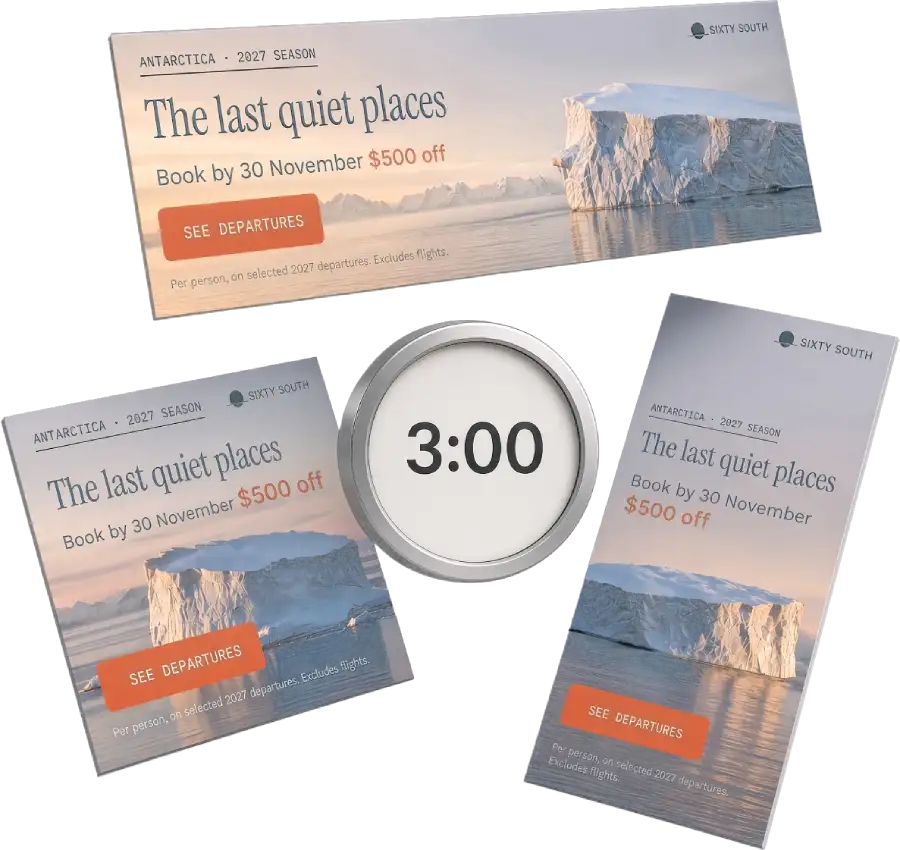
- Start with identical artwork. Use one approved design, brand fonts and assets. Produce three required sizes—for example, 300×250, 728×90 and 160×600—with the same message sequence.
- Check what stays editable. Compare typography, image crops, effects and layer structure against the approved artwork. Record manual corrections.
- Make a late client change. Replace the headline with longer copy, change the price and hold the CTA for another second. Record which edits propagate and which you repeat.
- Review the whole set. Open the preview as a stakeholder would. Check access requirements, motion, line breaks and the final frame at every size.
- Export for one named platform. Check dimensions, ZIP contents, click handling, external dependencies and animation limits against its published requirements. Include a backup image if the brief requires one.
- Count the complete effort. Record initial build, corrections, revision, export and QA time separately. Confirm how you retain editable source and whether delivery requires ongoing hosting.
Choose using the completed set and its next revision. Include the cost of all editors and any generation or hosting charges. This is a suggested evaluation method, not a test we have already run across all 11 tools.
Check delivery requirements before buying
An HTML5 export option does not by itself establish compatibility with your destination. Check the actual file and the platform's account requirements.
- Google Ads display ad specifications: file requirements and HTML5 account eligibility.
- HTML5 banner specs by platform: our dated requirements catalogue with links to primary sources.
- Free HTML5 banner validator: inspect a ZIP's dimensions, files, weight and clickTag against supported platform checks.
Passing a technical validator does not guarantee platform acceptance. Content, account status and policies also matter.
Try one approved Figma banner set
Use the trial brief above with a campaign you already know. Import the artwork, inspect the first animation, make one revision and check the exports. The rebuild walkthrough shows the process before you start.
Moving off Animate?
Bring the banner set.
We’ll rebuild it with you.
We’re confident Foldwrap can speed up your banner production. But learning a new tool takes time and mental effort, even when it makes the work easier. Bring a set you already made in Animate. We’ll help rebuild its animation, sizes, and export settings in Foldwrap.
What to bring
- Source artwork and any editable design files
- A preview of the animation you want to recreate
- The required sizes and destination ad platform
You keep the editable master, .foldwrap source file and exported files, whether or not you continue with Foldwrap.
Have approved Figma designs?
See the Figma import workflow ↗
Common questions
What is the best free tool for HTML5 banner ads?
Google Web Designer is a fully free HTML5 authoring option with visual animation and code editing. Foldwrap's free exports carry a watermark, while Bannerify offers limited free functionality and Pro trial runs. Check that a free plan lets you deliver the format you need.
Is Adobe Animate still usable for HTML5 banners?
Yes. Adobe says Animate remains available to new and existing users, with security and bug fixes but no planned new features. Its current maintenance FAQ says there is no discontinuation deadline. Existing source libraries can still make it the practical choice.
Can I go straight from Figma to an animated HTML5 banner?
Yes. Bannerify animates and exports inside Figma; Foldwrap imports frames into a dedicated browser editor. Compare the same artwork after export and check fonts, effects, image crops and editability before choosing.
Can one project produce multiple banner sizes?
Yes, but the workflow differs. GWD supports responsive layouts and size-specific overrides; Foldwrap keeps separate size variants in one creative. In either approach, inspect every required size after a copy or animation change.
What should I compare during a free trial?
Build the same three sizes, make one headline and timing revision, and export for your target platform. Record manual corrections and total production time, then check source access, paid-plan limits and any hosting requirement.
Do these tools guarantee my ads pass platform review?
No. Technical checks can catch file problems, but platforms also review content, account status and policies. Validate the exported ZIP against the destination's published specifications before delivery.